Washable Coastal Rugs: Light, Relaxed Style for Everyday Rooms
Washable coastal rugs can bring the easy, airy feeling of a shoreline-inspired room into daily life without making a home feel like a themed set. Start with a light palette, choose a pattern that suits the room’s visual weight, and place the rug where it supports the way your household lives. The right choice can feel relaxed and practical at once.
What makes a room feel coastal?
Coastal style is less about placing seashells everywhere and more about creating an open, comfortable mood. Light colors, natural-looking textures, gentle contrast, and uncluttered shapes help a room feel calm. A rug can support that mood while still serving as a useful layer underfoot.
Think of the look as a balance of three elements:
- Color: pale blue, soft green, sandy beige, ivory, warm white, and muted gray can suggest sun, water, and natural materials.
- Pattern: uncomplicated stripes, loose geometrics, softened motifs, and open designs often feel more relaxed than dense, high-contrast repeats.
- Placement: a rug should relate to furniture and define a useful zone, rather than simply sit in the emptiest part of the floor.
You do not need every coastal color at once. A room with warm wood and white upholstery may need only a small touch of blue. A mostly blue space may benefit from a neutral rug that gives the eye a quieter place to rest. Consider the finishes already in the room before choosing; the goal is a comfortable connection, not a perfect match.
For a broad starting point, browse the collection of washable rugs, then narrow the choice by color, room, and size. Current designs and available dimensions can change, so confirm the live product page before deciding.
How do you choose a light coastal palette?
Begin with the largest colors already in the room: the floor, sofa, cabinets, or curtains. A rug can echo one of those colors, introduce gentle contrast, or provide a bridge between warm and cool finishes. Looking at the whole room is more useful than choosing from a small color swatch alone.
Use blue as an accent, not a requirement
Blue is a familiar coastal cue, but it does not have to dominate. A pale blue pattern on an ivory background can add color without making a small room feel heavy. If the room already has blue cushions or artwork, choose a rug that includes a related shade alongside a neutral. That repetition makes the elements feel connected.
For a softer look, consider muted blue-gray or green-blue rather than a highly saturated shade. These colors can work with white walls and natural wood while keeping the room from feeling stark. A rug does not need to match every blue object exactly; a shared warm or cool undertone can be enough.
Let warm neutrals keep the room welcoming
Ivory, sand, beige, and warm gray can bring balance to a cool palette. They are useful when a room has pale walls or light flooring and needs a little definition. If the furniture and floor are both light, choose a pattern with enough contrast to show where the rug begins and the room continues.
A very pale rug can make a space feel open, but daily use matters. Entryways, kitchens, and pet areas may see muddy shoes, food splashes, or other routine messes. Choose a pattern and color you are comfortable living with, and follow the care guidance for the specific rug rather than relying on color alone to hide every mark.
Connect the rug to existing materials
Natural wood, woven baskets, linen-like upholstery, and simple metal finishes can all sit comfortably alongside coastal colors. The rug can pick up one material’s warmth or one textile’s accent color. If the room already contains several patterns, choose a rug with a more open field. If the furniture is plain, a gentle motif can add interest.
Try a simple color check before choosing. List the room’s two largest colors, then identify one accent color you want to repeat. If a rug contains at least one of those tones and does not introduce a competing dominant color, it is likely to sit comfortably in the existing palette. For more inspiration, browse the style browsing page. Treat inspiration as a starting point: check the actual product image, dimensions, and current options before placing an order.
Which relaxed patterns work best?
The pattern’s scale and density affect how the whole room feels. A small, repeated motif creates more visual activity than a large, open design. Neither is automatically better. The useful question is how much pattern the room can comfortably hold.
Choose stripes for a straightforward, easygoing look
Stripes create movement without adding a complicated motif. Narrow stripes can feel crisp and energetic, while wider bands tend to read more simply from across a room. Direction also matters. A long runner with stripes along its length can emphasize a hallway or kitchen path, while stripes across the width may make a narrow area appear broader.
Before choosing a stripe, look at other lines in the room. Cabinet fronts, floorboards, window frames, and furniture legs already create visual direction. A stripe can reinforce those lines or provide a gentle counterpoint. Avoid adding a strong stripe if the room already feels busy with competing patterns.
Use open motifs to keep a small room feeling light
Geometric or abstract designs with visible space between their elements can add detail without filling the entire visual field. This can work well in a compact bedroom, a reading corner, or a small entry. A larger open motif may read clearly from a distance, while tiny high-contrast marks can look busier than expected when spread across a floor.
Look at the rug image at more than one scale. At close range, a design may seem delicate; from the doorway, the same pattern may appear stronger. If possible, compare its colors with a photo of the room in daylight and evening light. This check can help you spot a pattern that might feel unexpectedly bold once it is in place.
Keep the room’s pattern count in mind
A patterned rug can work with patterned curtains or cushions, but give the eye a clear hierarchy. One pattern can be the main feature, another can be quieter, and the rest of the room can provide breathing space. Repeating a color across two or three items helps them relate even when their motifs differ.
If you are unsure, simplify. Choose a rug whose background color relates to the room and whose secondary color appears elsewhere in a small accent. You can add more pattern through removable cushions or a throw later. The rug is a broad visual surface, so a little restraint there can make the entire space feel more composed.
Read the pattern at the size you plan to use
A motif that looks small in a product thumbnail may repeat many times across a larger rug. Conversely, an oversized design on a small accent may show only part of the pattern. Imagine the design within the actual footprint you measured, not as a floating image on a screen. This matters when the rug will sit beneath a sofa or table, because furniture can cover a large part of the motif.
For example, a low-contrast repeating pattern may be a gentle foundation beneath a sofa and coffee table, where only the exposed border is visible. A more distinctive open motif may suit a smaller entry rug that is seen all at once. Think about the viewing angle and what will cover the surface before deciding how bold the design should be.
Where should a coastal rug go?
Room placement starts with function. Decide what furniture or activity the rug should connect, then check the dimensions against that area. An attractive rug may feel awkward if it is too small to relate to the furniture or sits in a path where doors and chairs catch its edges.
Living room: bring the seating group together
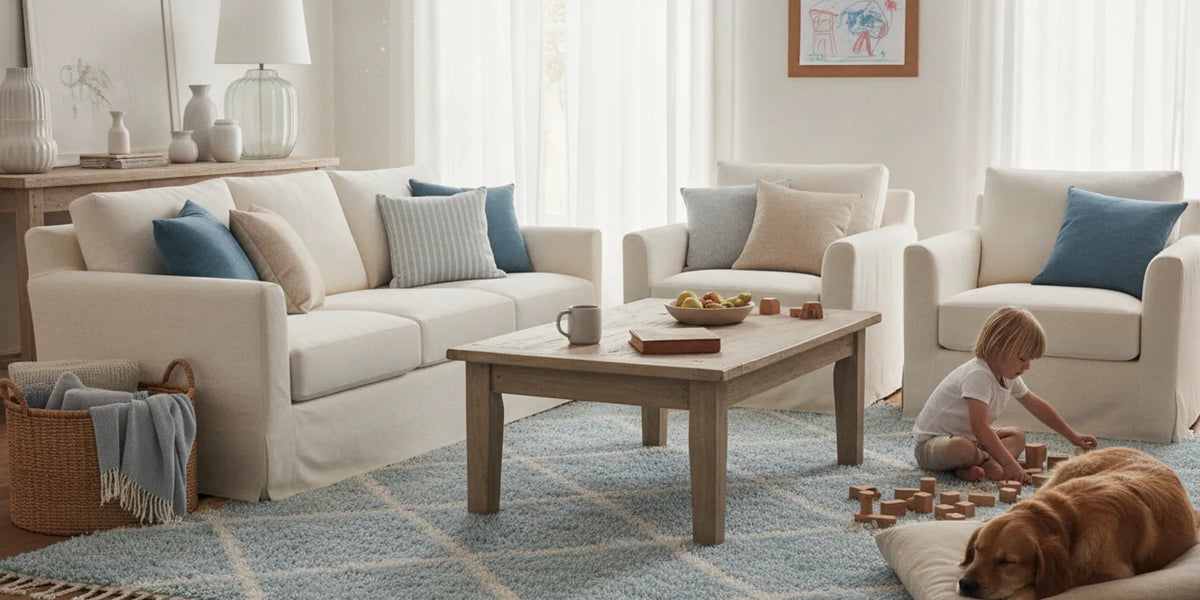
In a living room, use the rug to make the seating area feel like one destination. A larger rug can sit beneath the front legs of a sofa and chairs, while a smaller accent rug may work in a reading nook or beside a favorite chair. Aim for a layout where the rug relates to the main furniture rather than floating by itself in the center.
Measure the seating arrangement before browsing. Mark the intended rug boundary with painter’s tape or another removable marker, then walk around it. Check that pathways remain open and that the rug will not interfere with doors. This outline can help you see whether a 3x5 accent is suitable for a smaller zone or whether the room needs a broader size. Use the rug size guide as a planning aid, and confirm the dimensions offered for the design you like.
Consider a typical seating example: if a sofa faces two chairs, outline the group as a single rectangle and see whether the rug can reach under the front feet of the main pieces. If it cannot, decide whether the intended effect is a small accent zone rather than an anchor for the whole group. Either approach can work, but making that decision before ordering helps avoid a rug that appears unintentionally undersized.
Kitchen: place a runner where daily tasks happen
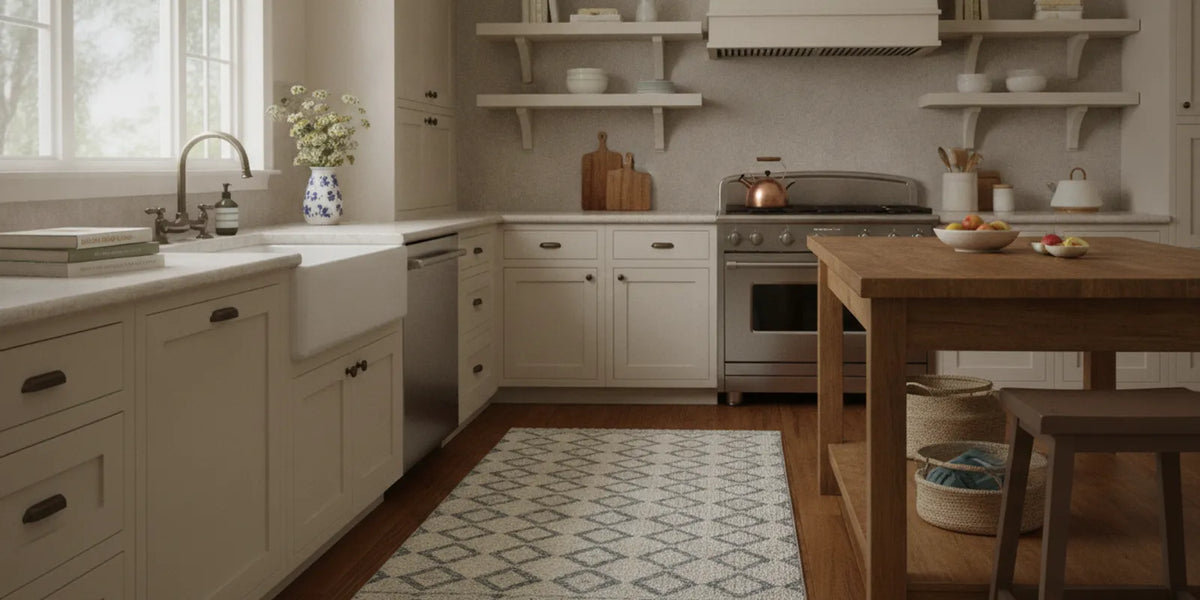
A 2.5x7 runner can suit a kitchen work area, including in front of the sink or stove, if the available floor space allows. That placement puts a washable rug near dishwashing, food preparation, and the paths used while cooking. It can also work near pet bowls when a dog tends to make a mess while eating or drinking. It can help keep the floor clean, but cannot guarantee that every spill stays on its surface.
Measure the run between cabinets and appliances. Leave enough room for cabinet doors, drawers, and appliances to open without catching the rug. Check that the runner does not obstruct a walkway or create a curled edge where people step. In an active kitchen, a pattern with some variation may be easier to live with than a perfectly uniform pale field, but choose a design you enjoy seeing every day.
Think through the kitchen’s movement before settling on a spot. Stand at the sink as you normally would, open the dishwasher, and pull out the nearest drawer. If a runner would sit partly under a door or drawer, adjust the placement or reconsider the size. The goal is a defined work zone that does not become an obstacle during the routine of preparing food and cleaning up. Explore the kitchen rug collection for options intended for that room. Check each listing for current sizes and care details.
Entryway: create a clear landing spot
An entry rug can make the transition from outside feel more welcoming and give shoes a defined landing area. Measure the doorway and nearby walking path, including the swing of the door. A low-profile rug may be easier to place near a door, but test the clearance rather than assuming every rug will fit every threshold.
Light coastal colors can brighten an entry, while a patterned design can soften the visibility of everyday dust. Think about how much traffic passes through and whether the rug’s dimensions suit the width of the space. A long runner can guide the eye through a hallway; a compact accent can define a small foyer without taking over the floor. See the entry and doorway rug selection for designs to consider.
For a narrow entry, measure both the walking line and the door clearance. A rug that reaches wall to wall can feel crowded and may catch the door; a little visible flooring around it can make the area feel intentional. If household members remove shoes at the entrance, check that there is still room to stand and turn without stepping onto an edge. Let the room’s measurements and the current product details guide the final choice.
Bedroom: soften the view beside the bed
In a bedroom, a rug can add color and pattern without requiring changes to the larger furniture. Consider the space beside the bed and the route you take when getting up. An accent rug can work beside one side of the bed or at its foot, depending on the room’s layout. Keep enough clear floor around dressers and doors for comfortable movement.
For a coordinated look, take one color from the bedding and repeat it in the rug, or choose a neutral design that lets the bedding remain the focal point. The bedroom rug collection offers a room-specific place to browse, but verify each listing’s available sizes and construction.
In a shared bedroom, think about where each person steps when getting out of bed. A small accent placed only on one side might not serve both routines. In a guest room, keep the rug far enough from the door and luggage path to avoid creating an awkward edge. These small placement details can matter as much as the color when you use the room every day.
Bathroom or pet area: match the spot to the product
A small rug may be useful near a bathroom vanity or under a pet’s food and water bowls, provided the setting suits the rug and its care instructions. For cat owners, a 3x5 rug is often used beneath a litter box to help keep the area cleaner and help keep litter from spreading through the house. It will not stop all litter from traveling, so routine cleanup remains part of the plan.
Before placing a rug in any area, consider moisture, the type of floor, and how the rug will be cleaned. The built-in waterproof lining within the nonslip backing is intended to make a liquid spill or pet accident less likely to soak through to hard-surface flooring. It is not a guarantee of floor protection in every situation. Check the product details and use the rug on suitable floors. Do not assume the same rug is suitable for a wet bathroom floor or any other location simply because it is washable.
What should you check before choosing a size?
Size affects both comfort and appearance. A rug can look too small when it sits apart from the furniture it is meant to anchor, but a larger rug may crowd an already narrow walkway. Instead of relying on a standard rule alone, measure the exact area and plan around fixed features.
- Measure the usable floor. Record the length and width of the area, then note door swings, cabinets, heating features, and furniture legs.
- Define the rug’s job. Decide whether it should anchor seating, line a kitchen work area, welcome people at the entrance, or add softness beside a bed.
- Mark the proposed outline. Use removable tape to check how the rug will sit in the room. Walk through the space and open doors and drawers.
- Compare listing dimensions. Product options can differ, so confirm the live page rather than assuming every design comes in every size.
- Consider the floor beneath it. Integrated nonslip backing is intended for suitable floors; traction is not effective over carpet.
Take measurements in two directions, and write them down with the room name. A kitchen note might read “clear walkway between island and cabinets: 31 inches wide, 8 feet long; dishwasher opens toward the area.” A living room note could list sofa width, distance between chairs, and the edge of the main walking path. The details help you compare possible dimensions without having to measure again each time you browse.
Next, test your plan in the room. Use painter’s tape to mark the approximate rug perimeter, then live with the outline for a few minutes. Walk the normal route, sit on the furniture, and open nearby doors. If the taped boundary makes the area feel tight, shift it or try a smaller footprint. If it looks disconnected from the furniture, try expanding the outline before committing to a size.
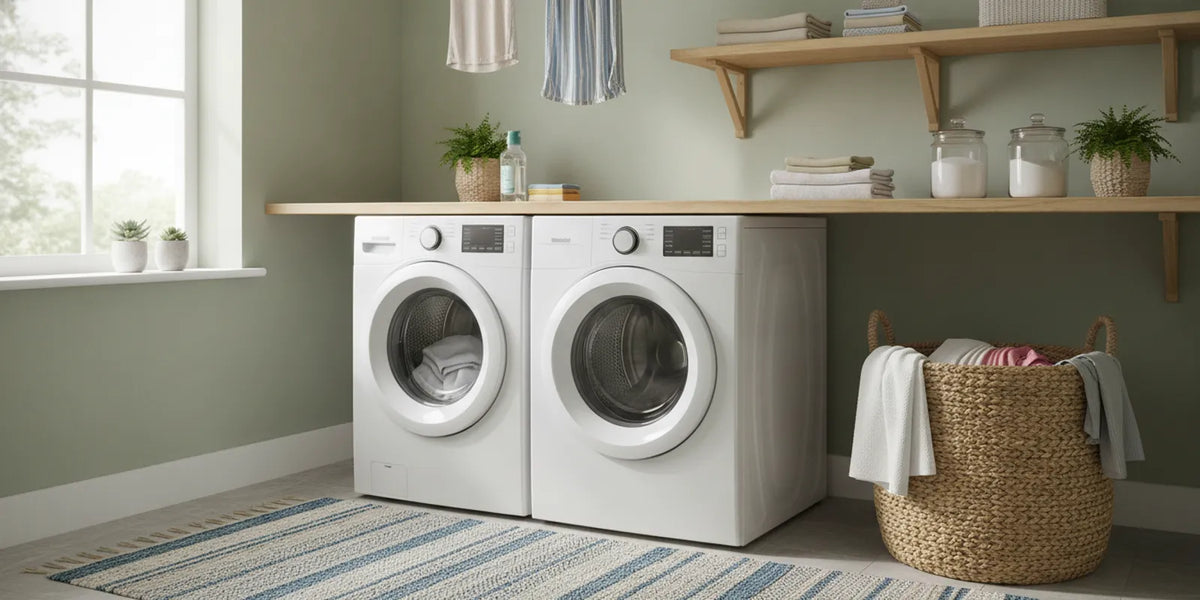
A low-pile profile of about one-quarter inch is part of the rug information provided by the company, but fit still depends on the doorway, floor, and furniture. If you are considering a larger size, do not assume your washer has enough capacity. Confirm size-specific guidance before washing a large rug. A measuring plan is only one part of the decision: also check the individual product page for the selected design’s construction, available dimensions, and care instructions.
What makes a one-piece washable rug practical?
My Magic Carpet describes its rugs as one-piece designs with washable construction, a built-in waterproof lining within the nonslip backing, and no separate rug pad on suitable floors. For someone who does not want to manage a separate cover and pad, the integrated format can be straightforward. A rug can still shift depending on the floor and conditions, so follow the product instructions and use it only where the backing is suitable.
Think about the everyday task you want the rug to support. In a kitchen, it may sit near splashes from the sink. At an entry, it can mark a transition from outdoors to indoors. Near a pet’s bowls, it can provide a defined place for feeding. The construction can make cleanup more convenient, but it does not remove the need to respond to messes promptly or check the care instructions for a particular design.
A one-piece setup also changes the shopping question. Rather than planning for a separate top layer and pad, you can focus on the rug’s dimensions, look, and location. But do not assume that every household surface behaves the same way: the nonslip backing is intended for suitable hard floors, and traction is not effective over carpet. Consider the exact floor where the rug will sit before deciding that an integrated backing meets your needs.
Do not assume that every item sold by a rug retailer has identical cleaning rules. The brand also offers other product types, and care instructions vary by product. This guide is about rugs; check the individual listing for the product’s specific materials, dimensions, and maintenance guidance.
How do you care for a washable rug?
Prompt, gentle care is a useful routine. Blot a spill rather than rubbing it further into the fibers, then spot-treat as directed. For a larger mess, the stated rug-care instructions call for washing the rug separately on a cold, delicate cycle with mild detergent. Tumble-dry on low or air-dry. Do not use bleach, high heat, or an iron.
Some stains, especially oil-based ones, may set quickly. Address a mess as soon as practical and check the product’s care details before treating it. Avoid assuming that a rug can handle every stain remover or laundry setting simply because it is washable. Gentle care and the correct cycle matter.
A practical response sequence is simple: first lift any solid material without pressing it deeper into the rug; next blot the area with a clean cloth; then spot-treat in line with the listing’s care guidance. If the mess needs a full wash, use the separate cold, delicate cycle and mild detergent described in the care directions. After the wash, choose low tumble-drying or air-drying as directed. This order gives you a clear routine without adding unsupported chemicals or harsh settings.
Washer capacity is important. The general care guidance does not establish a suitable washer size for every rug dimension. Confirm size-specific instructions, particularly for larger rugs, and do not force a rug into a drum that cannot accommodate it comfortably. If you are uncertain, contact the company through its contact page before washing.
It can help to consider care before a spill happens. Keep the product listing or care instructions accessible, and decide where the rug can be washed if a larger accident occurs. A smaller accent and a large area rug may not have the same practical washing requirements. Planning around the actual dimensions is more reliable than assuming that “washable” means the same process for every size or every home machine.
How can you make the room feel relaxed, not themed?
A coastal-inspired room can feel natural when the references are subtle. Choose one or two cues, such as a pale blue rug and warm wood, instead of repeating shells, anchors, and ocean imagery in every corner. Simple shapes and comfortable materials often create a more enduring room than a collection of obvious motifs.
- Leave visual breathing room. Avoid filling every wall and surface with decoration. A light rug can be a quiet foundation.
- Mix warm and cool tones. Pair blue or gray with wood, cream, or sand so the room feels inviting rather than cold.
- Repeat colors with restraint. Let a rug color reappear in a cushion, artwork, or small object, but do not make every item match exactly.
- Balance pattern and texture. If the rug has a noticeable design, keep nearby textiles simpler. If the rug is subtle, another texture can provide interest.
- Choose for your real routine. A room should work for meals, play, pets, and guests, not only for a photo.
One way to avoid a room that feels overly coordinated is to use a three-part plan. Choose a dominant neutral already in the room, select one secondary color that appears in the rug, and leave the remaining accents flexible. For example, warm white walls and pale wood can provide the base, a muted blue rug can add the secondary color, and cushions can mix cream and natural textures rather than repeating the exact rug motif.
You can also let the room’s function influence how much decoration to add. A family living room may already contain toys, books, and patterned throws. A calmer rug can help settle that mix. A small guest room with plain bedding may have more room for a noticeable motif. In either case, the coastal feeling comes from the overall balance, not from adding a particular object or matching every finish.
It can help to make a short list before shopping: the room’s main colors, the rug’s intended location, the dimensions you measured, and the amount of pattern you want. This turns an open-ended search into a few practical choices. Then compare the live design options and select a rug that feels right for the room you actually use.
How do you compare possible rugs before buying?
When several designs seem suitable, compare them against the same practical checklist rather than relying on a quick visual reaction. This keeps color and style in the conversation while making sure that size and use do not get overlooked.
- Check the room and use. Write down whether the rug is for a kitchen, entry, seating group, bedroom, or pet area. That helps rule out designs and dimensions that do not fit the intended spot.
- Compare the palette in context. Look at the rug beside the room’s main colors, not by itself. Ask whether it repeats an existing tone, adds a useful contrast, or introduces too many new colors.
- Think about pattern at full size. Consider how much of the rug will remain visible once furniture is in place and whether the motif will feel calm from the usual viewing distance.
- Recheck measurements and obstacles. Confirm the live product dimensions and compare them with your taped outline, door clearance, and walking path.
- Read care and construction details. Review the specific listing before ordering, especially if the rug will be used near food, pets, or a doorway.
A quick comparison can be written as three short notes for each choice: “works with the warm floor,” “pattern might be busy beside the curtains,” and “fits the taped kitchen outline.” This is more useful than trying to remember several product pages from memory. If a rug looks attractive but fails the size or placement test, keep it on the list for another room rather than forcing it into the first plan.
Current designs, available dimensions, and product details can change. Use the shop-all rug collection to browse, then confirm the live listing for the specific rug you are considering. A careful comparison should make the choice clearer, not turn a simple room update into a search for a perfect match.
Frequently asked questions
Are light washable coastal rugs practical for a busy home?
They can be, if the color and pattern suit your household and you are prepared to follow the care instructions. Light colors may make a room feel open, while a varied pattern can be easier to live with than a completely uniform surface. Blot spills promptly, spot-treat, and wash according to the specific rug’s instructions.
Can I use a washable rug outdoors?
This guide does not establish that the rugs are outdoor-safe. Do not assume a rug is suitable for a patio or exposed outdoor space unless its current product information specifically says so. Choose a location and care routine supported by the listing.
Does the nonslip backing work on carpet?
The company’s guidance says traction is not effective over carpet. The backing is intended for suitable floors, so consider the underlying surface before placing the rug and follow the product’s use instructions.
Can every size go into a home washing machine?
Do not assume that one washer-capacity guideline applies to every size. Follow the individual product’s care information and confirm size-specific washer guidance for larger rugs before washing. The stated routine is a separate cold, delicate wash with mild detergent, followed by low tumble-drying or air-drying.
Where can I browse coastal-inspired designs?
Start with the shop-all rug collection and explore room or style options that suit your plan. Product imagery, sizes, and availability may change, so check the live listing before choosing.
A considered palette, a comfortable pattern, and a size measured for the room can make a coastal-inspired rug feel light while still fitting the rhythms of home life.