Artículo: Washable Rug for a Home Office: Comfort, Size, and Chair Clearance
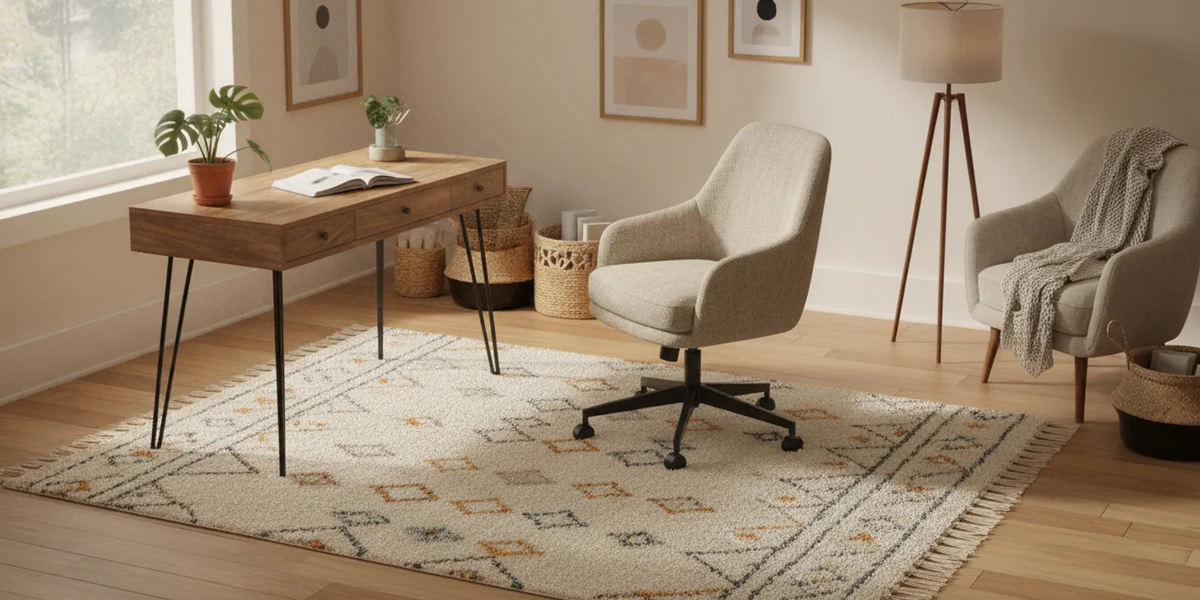
Washable Rug for a Home Office: Comfort, Size, and Chair Clearance
A washable rug for home office use should fit the way you work, not just the empty floor. Before choosing a color or pattern, map the desk footprint, chair path, door swing, and the spots where crumbs or spills are most likely. A little measuring helps you avoid a rug that bunches under chair wheels, catches a door, or leaves the work area feeling visually disconnected.
Explore washable rugs for your space
Map your work area before choosing a size
Home offices can be a dedicated room, a corner of a bedroom, or a desk tucked into a shared living space. The right rug size depends on the work zone you want to define and the furniture that needs to sit on it. Start with what is actually in the room: desk, chair, storage cabinet, and the route you walk to reach them.
Measure the desk from side to side and front to back. Then account for the chair, including the space it occupies when you pull it back to sit down and when you push it in. If the rug is meant to visually anchor the whole setup, check whether the desk legs and chair can sit on it together. If you only want a small accent under the front of a desk, measure that smaller area and confirm that the chair can move without repeatedly crossing the rug edge.
Use painter’s tape or a few sheets of paper to mark the outline on the floor. Sit down, stand up, and roll or slide the chair through its everyday path. Open storage drawers if they extend toward the rug. Walk the route from the office entrance to the desk. This quick mock-up reveals awkward edges more clearly than estimating from memory.
Consider the visual boundary, too. In a room used for more than work, a rug can mark the office zone without adding a divider. In a dedicated office, it can connect the desk, chair, and nearby furniture. Neither goal requires covering every inch of floor. Leave enough visible flooring around the rug to keep its outline intentional and to preserve a clear route through the room.
For a desk in a bedroom, consider what happens when you move other furniture. A chair pulled out from a nearby dresser may cross the rug corner, and a storage basket can end up partly on the rug even if it was not part of the original plan. For a desk in a living room, account for the room’s main walkway and the space where people sit or gather. The rug should define the work zone without making ordinary movement around the shared room feel awkward.
Also decide whether you want the rug to sit centered beneath the desk or aligned with the desk’s front edge. Centering can make a small setup look deliberate, while a forward placement may bring the rug closer to the chair’s working area. Neither approach is automatically right. The room’s sightlines, furniture legs, and chair travel determine which arrangement looks and feels balanced. A paper or tape outline makes it easy to compare the two positions before committing.
If the office changes during the day, include those changes in the layout check. A folding chair, a footrest, a laptop stand, or a small rolling drawer may occupy space only at certain times. Measure the room in its normal working configuration, not only when everything is pushed neatly against the desk. Think about cables and power strips as well: the rug should not cover a cable route in a way that creates a snag or makes it difficult to access the cord.
How much of the desk and chair should the rug cover?
There is no single footprint that works in every office. The useful question is where the chair will travel and whether the rug edge will interrupt that movement. A desk-only rug may leave the chair on bare floor. A larger rug may hold both desk and chair, but it also needs to fit the room and clear nearby doors and furniture.
If you use a rolling chair, consider the transitions between rug and hard flooring. Wheels that cross an edge every time you sit down can feel distracting, and a rug that is too small may shift or curl at the point where the chair turns. A low-profile rug can make the transition less pronounced than a thick, plush style, but the exact feel depends on the chair, rug, and floor. Test the layout before ordering where possible, and check that your chair still moves as you expect.
For a stationary chair, look at the full area where your feet land and where the chair legs rest. If you frequently pull the chair away from the desk, include that extended position in your measurements. For a compact workspace, an accent rug may define the desk area without reaching the wall. For a wide desk with a separate reading chair or storage piece, a larger shape may make the arrangement feel more connected.
Think about the desk itself. With four legs, you may want all four on the rug, or you may prefer the rug to begin just in front of the desk. A pedestal or wall-mounted desk has different placement needs. Use the taped outline to check whether the arrangement looks balanced from the room entrance, not only from the chair.
Compare rug formats against the job they need to do
Start with the area you want to cover, then compare that measurement with the rug sizes currently available. My Magic Carpet’s assortment includes 3x5 accent rugs and 2.5x7 runners; check the live product listing for the particular style and size options before choosing. A compact accent can suit a smaller desk zone. A runner is long and narrow, so it may work where the office layout has a clear lengthwise path, but it will not provide the same width as a broader rug.
| Format to consider | Where it may fit | Check before choosing |
|---|---|---|
| 3x5 accent | A modest desk area or a small office nook | Whether the chair can stay on the rug through its normal movement, and whether the desk footprint fits the shape you want |
| 2.5x7 runner | A narrow, lengthwise workspace or a defined path beside a desk | Whether its width and orientation suit the chair, rather than leaving the chair repeatedly crossing a long edge |
| Larger area format | A wider desk arrangement or an office with additional furniture to visually connect | Current size availability, room dimensions, doorway clearance, and whether the exact rug can be washed in your machine |
These are starting points, not rules. A 3x5 rug may work well under a smaller desk but may be too narrow for a wide chair path. A runner can look neat along a narrow desk, but its length alone does not guarantee that it will cover the chair’s side-to-side movement. A larger rug might anchor more furniture, while taking up too much of a small room. Let the measured outline decide.
For a broader view of available shapes, browse small accent rugs and the full rug assortment. Confirm size options on the individual live product page. The collection name is a useful way to narrow choices, but it is not a substitute for checking the actual dimensions of the selected style.
Check chair clearance, doors, and furniture edges
A rug can fit its intended footprint and still interfere with the room. Check the door before you settle on a size. Slowly open and close the office door over the taped outline. Include closet doors and cabinet doors if they swing across the floor. If the door brushes the mock-up, a smaller or differently placed rug may make the entrance easier to use.
Look at wheels, feet, and casters. Chair casters can catch an edge or push a lightweight rug out of alignment, especially when the chair crosses the same point all day. Keep the main chair path on a consistent surface when possible. If your chair must roll between rug and bare floor, test the transition using the chair you actually use. A chair mat may be a separate consideration, but do not assume that every mat or rug combination will stay in place; check how the materials interact on your floor.
Also check the space beneath the desk. A rug that ends directly under one set of legs can create an uneven support point if the other legs sit on bare flooring. A rug that extends beneath the whole desk may be more visually cohesive, but it needs to fit the room and allow drawers and chair movement. If the desk has wheels or adjustable feet, make sure the rug does not block them.
Leave a practical path around the workstation. A rug should not become an obstacle between the office entrance, desk, and storage. This matters in a shared room where people pass through the space. A smaller rug placed neatly under the work zone may be better than one that extends into a doorway or walking lane.
What floor type is beneath the rug?
Rug backing and floor surface matter together. My Magic Carpet rugs have nonslip backing on suitable floors. Traction is not effective over carpet, and no rug should be treated as a universal guarantee against movement. Check the floor finish and product guidance for your specific setup. A clean, flat hard-surface floor is different from carpet, an uneven threshold, or a floor with a loose mat underneath.
Before placing a rug, make sure the area is clear of debris and that the rug lies flat. Smooth out folds according to the care and product instructions, and check the corners and edges after positioning. If the rug moves during ordinary chair use, reconsider the placement and the floor combination instead of assuming the backing will hold in every condition. The same advice applies if you are layering a separate mat: the combination can behave differently from a rug alone.
Room use matters as well. A desk nook on a hard floor may benefit from a rug that defines the area and is easy to clean. An office with carpet presents a different traction question, and the backing should not be relied on for grip there. If you want to compare designs suited to shared spaces, the shop-by-room guide can help you think through how the rug fits its surroundings.
Choose visual style for a room you use every day
A home office needs to feel like part of your home, especially when the desk sits in a bedroom or living room. Consider the colors already in the space: desk finish, wall color, curtains, chair upholstery, and storage. A rug can repeat one existing color, soften a strong contrast, or provide a patterned focal point. Decide which role matters most before comparing designs.
For a quiet look, try a subtle pattern or a color close to the room’s existing palette. This can help the desk area blend into a multipurpose room. For a more defined work zone, a distinct pattern or deeper color can make the rug’s boundary visible. If the room already has patterned curtains or upholstery, a simpler rug may feel calmer. If the furniture is plain, a patterned rug can add interest without requiring a full room makeover.
Consider the view from your video-call position, too. A rug may not appear behind you, but its color can influence the feel of the room when you enter or sit at the desk. Choose a design you are comfortable seeing throughout the day, rather than selecting only for a small product image. The beige and cream collection is one option for a neutral palette; the blue collection offers another direction. Check live listings for patterns and sizes that fit your measurements.
Texture and profile can affect the impression as much as color. My Magic Carpet rugs have an approximately quarter-inch profile. That is a low-profile construction, but whether it feels right under your chair depends on your specific furniture and preferences. Look at the product details and use the room mock-up to judge how much floor the rug will cover and how its edge meets the rest of the space.
Plan for crumbs, coffee, and everyday cleanup
An office rug sees ordinary household life: a dropped snack, crumbs from a quick lunch, a splash from a mug, or dust tracked in from another room. A washable rug can make cleanup more manageable, but it still needs prompt care. Follow the product care instructions and act on spills rather than letting them sit. Some stains, especially oil-based ones, can set quickly.
For a spill, blot promptly with a clean cloth rather than rubbing it deeper into the fibers. Spot-treat as appropriate for the rug and the substance. For a larger mess, follow the washing directions for that rug. The recommended routine is to wash the rug separately on a cold, delicate cycle with mild detergent, then tumble-dry on low or air-dry. Do not use bleach, high heat, or an iron.
Measure the rug and check the washer before buying. Do not assume that a machine can accommodate every size simply because the item is washable. Larger rugs may need more room to move freely, and washer capacity varies. Verify size-specific product guidance and your machine’s capacity for the exact rug you are considering. If your office rug is not due for a full wash, regular vacuuming and prompt spot care can help with routine dirt; follow any product-specific directions for vacuuming.
Think about where you will handle cleanup. Is the path to the laundry area clear? Can you manage the rug comfortably when it is damp? Is the washer large enough for that size? These practical questions are part of choosing the right rug, not an afterthought. If you want a rug near a desk used for meals or crafts, expect more frequent spot attention than in a room used only occasionally.
Make the one-piece setup work with your layout
A one-piece rug can simplify a home-office setup for people who do not want a separate rug pad and cover to arrange together. My Magic Carpet positions its rugs as one-piece, washable rugs with a built-in waterproof lining within the nonslip backing. That lining may make a liquid spill or pet accident less likely to soak through to hard-surface flooring, but it is not a guarantee of floor protection. Blot spills promptly and follow the care directions.
Keep the claim in context: suitable floor conditions matter, and nonslip traction is not effective over carpet. A built-in backing does not remove the need to check the chair path, door swing, and rug edges. It is still worth treating the rug as part of the whole workspace setup. If there is a separate protective mat under a rolling chair, make sure the combination lies flat and moves as intended before relying on it in daily use.
You can compare how a simple pattern or solid color might fit the office by looking at individual product listings such as the Solid Grey washable rug or the Parviz Grey washable rug. Product photos and listed size options can change, so review the current details before making a selection. The best choice is the style that fits the measured space and works with the furnishings you already have.
Make a quick fit check before ordering
Use this short checklist after narrowing your choices:
- Measure the work zone. Record desk width and depth, chair width, and how far the chair moves when you sit, stand, and turn.
- Mark the proposed rug outline. Use tape or paper, then view it from the office entrance and from your usual seat.
- Test the door. Open and close the room door, closet, and nearby cabinets across the marked area.
- Check the chair path. Look for repeated crossings over a rug edge, caster catches, or a layout that leaves the chair partly on and partly off the rug.
- Consider the floor. Confirm that the backing and floor combination are suitable; do not rely on traction over carpet.
- Review the exact product. Verify live size options, care directions, pattern, and washer considerations for that rug.
- Plan routine care. Decide how you will blot spills, spot-treat, and wash the rug according to its instructions.
If the mock-up seems cramped, try a smaller outline or rotate the rug. A runner may suit a long, narrow desk arrangement; an accent may define a compact nook. If neither leaves enough room for chair movement, reconsider whether you want a rug beneath the chair at all. You can still use a rug to define the space just in front of the desk, provided the edge does not interfere with the way you enter and use it.
For a room with a separate entrance area, it may help to coordinate the office rug with a rug near the doorway. Browse doorway and entrance rugs for ideas, but measure each location independently. A style that connects two spaces does not mean the same rug size will suit both.
Frequently asked questions
Can I put a washable rug under a rolling office chair?
You can plan a rug around a rolling chair, but test the actual chair path and rug edge. Repeatedly rolling over an edge may catch or shift the rug. Measure the chair’s full movement and check the floor and backing combination; no layout guarantees that every chair will roll smoothly on every rug.
Is a 3x5 rug large enough for a home office?
It depends on the desk and chair footprint. A 3x5 accent can suit a compact desk area, but it may not cover a wide chair path or keep the chair fully on the rug. Mark its dimensions on the floor and test your normal movement before choosing.
Will a nonslip rug stay in place on carpet?
Do not count on the nonslip backing for traction over carpet. The backing is intended for suitable floors, and the floor surface affects how it performs. Check product guidance and test the setup rather than assuming the rug will stay in place.
How should I clean an office rug after a spill?
Blot promptly, spot-treat as appropriate, and wash after a larger mess according to the rug’s care directions. The recommended rug routine is a separate cold delicate wash with mild detergent, followed by low tumble-drying or air-drying. Avoid bleach, high heat, and ironing.
Can every size go in a home washing machine?
Do not assume so. Washer capacity and rug size matter, and size-specific capacity guidance should be confirmed for the product. Check the live product details and your machine’s instructions before washing a particular rug.
Find a rug that fits your work area
A few careful measurements can make it easier to choose a rug that fits the desk, clears the door, and works with the chair you use every day. Mark the footprint, check the live product details, and plan care around your actual washer and floor.