Vintage Rugs: How to Get a Collected Look with Washable Style
Vintage rugs bring a room a sense of history, softness, and personality. You can create that collected look with a new vintage-inspired rug, choosing colors, pattern, and placement that feel lived-in without calling a new piece antique or authentic vintage. The best vintage rugs for busy homes balance visual character with a practical plan for everyday care.
What gives vintage rugs their collected look?
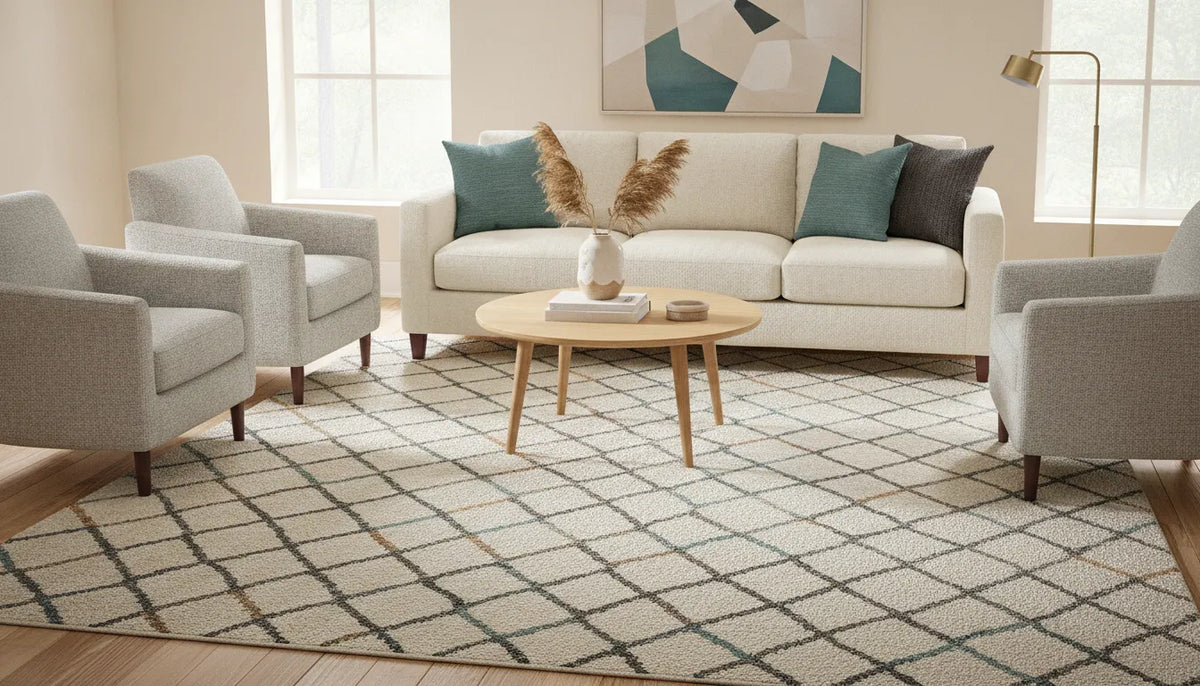
A collected room rarely looks as if every object came from one matching set. Its character comes from a mix of colors, shapes, materials, and patterns that feel connected without being identical. A vintage-inspired rug can help create that effect because its design may use softened-looking color, ornamental motifs, or an intentionally timeworn visual treatment.
Those details are a style choice, not proof of age. A newly made rug with a faded pattern is vintage-inspired; it is not an antique or a documented vintage textile. Keep that distinction clear when shopping and describing the piece. The goal is the visual mood: a room that feels personal, comfortable, and built over time.
Start by naming the feeling you want. Do you want a quiet foundation, a colorful focal point, or a pattern that links furniture and art? That answer helps narrow your palette and motif before you compare individual designs. Browsing the brand’s contemporary rug collection can help you compare a current visual direction with traditional ornamental patterns.
How do you choose colors for vintage rugs?
Color determines whether a patterned rug settles into the room or takes the lead. Vintage-inspired designs often use several colors together, but one should feel dominant. Identify the largest colors already in the space: flooring, sofa, curtains, cabinetry, or bedding. Then decide whether the rug should repeat one of them or introduce a deliberate contrast.
Choose a quiet base or a focal color
A low-contrast palette can make a room feel calm. Look for a pale or muted ground with motifs that blend into it. This works well when furniture and artwork already provide plenty of detail, or when you want the floor to read as one continuous area. A quieter rug can also help a small room feel less visually divided, especially when its base color relates to the floor.
A stronger palette turns the rug into a focal point. One saturated color can enliven neutral furniture, while a multicolor pattern can connect objects that otherwise feel unrelated. If the room already has bold art or upholstery, choose a rug whose colors echo those accents rather than introducing several competing new shades. A repeated color does not need to be exact; a related tone is often enough to make the combination feel intentional.
Use undertones to make colors feel connected
Two colors do not need to match exactly to work together. They do need to share a general temperature or visual character. Warm rust, cream, and olive can feel cohesive; cool blue, charcoal, and soft gray can do the same. A small repeated accent, such as a cushion or vase that picks up one rug color, helps the combination feel considered.
Consider how daylight and evening light change the room. A pattern that looks subtle in a bright product photograph may feel more prominent in a dim hallway. If possible, compare the design with nearby fabrics and paint in the room’s actual light before making a decision. Lay fabric samples near the floor, view them from the doorway, and check again after dark. This simple comparison can reveal whether the rug reads warmer, cooler, brighter, or quieter than you expected.
Let existing furniture guide the palette
In a living room, begin with the sofa and largest chairs. A patterned rug can repeat a sofa’s secondary color to make the arrangement feel connected. In a kitchen, use cabinet, counter, and floor colors as the starting point. In a bedroom, the rug can bridge bedding and wood tones rather than compete with a busy duvet.
For example, imagine a room with a deep blue sofa, honey-colored wood, and a few terracotta accessories. A rug with a muted cream ground and small blue and rust motifs could connect the main pieces without matching the sofa. If the same room already has patterned curtains, choose a less dense motif or a calmer color distribution so the room has a place for the eye to rest.
For more options by motif and mood, explore rugs organized by style. Treat a collection page as a way to compare visual directions, then verify the specific product’s current size, color, construction, and care details before choosing.
What does distressing mean in a rug design?
Distressing describes an intentional visual effect that makes a design look softened, faded, or worn in selected areas. In a vintage-inspired rug, that treatment may break up a formal pattern or make a strong color appear less crisp. It creates visual texture; it does not establish the rug’s age, origin, or previous use.
Distressing can be useful when you want pattern without a sharply defined, high-contrast look. The irregular appearance may also make a design feel less formal. However, do not assume a distressed print will conceal every crumb, spill, or mark. Visibility depends on the colors, the type of mess, and where it lands. A design can make a small change less noticeable from across the room, but prompt cleanup still matters.
How to judge a distressed pattern at full scale
Look closely at the full design rather than judging only a thumbnail. Ask whether the pattern remains appealing from across the room, whether the edges feel balanced, and whether the colors work with your furniture. A faded effect can look subtle in a small image but quite busy when repeated across a larger area. Examine the central motif and the border separately: some rugs draw the eye to the center, while others use a strong frame around the whole design.
Think about the view you encounter most often. In an open living room, you may see the rug from a distance and from several angles. In a narrow entry, the design may be viewed close up as people walk over it. If you are choosing between two patterns, place their images beside a photo of your room or compare the colors with physical samples. Do not rely on the label “distressed” alone; the degree of fading and contrast varies from design to design.
It is also useful to distinguish visual wear from actual wear. A newly made design may simulate softened color, but that does not mean the fibers have been used or aged. If authenticity, origin, or age matters to you, seek documentation from a seller before treating a textile as vintage or antique. For a decorative look, describe a new product as vintage-inspired instead.
How do you place a vintage rug in each room?
Good placement makes a rug feel purposeful. Begin with the furniture layout and how people move through the room. Then choose a size that relates to that arrangement. A rug that is too small can appear like an isolated accent; a well-proportioned one helps define a seating area, dining zone, or bedside landing.
Measure before choosing a living room rug
In a seating area, use the rug to visually gather the sofa and chairs. Depending on the room and rug dimensions, furniture can sit partly on the rug or have its front legs on it. The key is consistency: avoid a layout where one chair barely touches the rug while the rest of the seating floats far away. Measure the full furniture group, including side tables if they are part of the arrangement, before deciding on the footprint.
Mark a proposed rug area with painter’s tape or paper. Walk around the outline and sit in each seat. Check whether the shape leaves enough space for doors and pathways, whether it frames the furniture, and whether the visible floor around it feels balanced. This mock-up is especially helpful when a decorative border matters: too little room around a border can make the design feel cramped, while a much larger floor gap can make a rug look detached from the seating.
For a collected look, combine a patterned rug with simpler upholstery, or pair a quiet rug with more expressive furniture and art. You do not need every leg of every piece to sit on the rug. What matters is that the layout reads as one deliberate group rather than a collection of separate objects. If you move the sofa frequently or reconfigure the room for guests, choose a placement that still works in the alternate arrangement.
Use color and scale in the bedroom
A rug beside or beneath a bed adds a defined area of color and pattern. Think about where feet land when getting up, and how much of the design should show beyond the bed frame. Smaller accent sizes can work beside a bed or at its foot, while a larger rug may extend under more of the furniture. Use the room’s measurements rather than relying on a single standard layout.
If your bedding is patterned, find a rug with a related color but a different scale or motif. Two patterns can coexist when they share a palette and do not have identical visual weight. If the bedding is plain, a more detailed rug can bring character to the room. Before settling on a size, measure the bed and the clear floor on each side. Consider drawers, closet doors, and the path to the bathroom, not only the visible area in a photograph.
A useful exercise is to decide what the rug should do first. If comfort beside the bed is the priority, place the rug where your feet land. If you want to frame the bed visually, make sure enough of the pattern remains visible around it. The right choice depends on the room, furniture, and selected rug dimensions rather than a universal formula.
Plan for door clearance and walking width in an entry
An entry rug creates a visual welcome and gives a narrow passage more definition. Measure door clearance, walking width, and the distance to nearby furniture before selecting a runner. A long runner can guide the eye through a hallway; a compact accent rug can mark a smaller landing. Make sure the rug does not interfere with a door swing, and leave a comfortable path around furniture or storage.
My Magic Carpet rugs have a nonslip backing intended for suitable floors, but traction is not effective over carpet. Check the surface beneath the rug and keep the area clear of curled corners or objects. Do not treat any rug as a guarantee against slips. In an entry, also consider the route from the exterior door to the rest of the home. A rug that is too short may not align with the way people naturally walk, while an oversized one may crowd the doorway.
Think about the pattern’s direction. A border can visually frame an entry, and a repeated motif can draw the eye down a hall. If the area is narrow, compare the design from the point where someone first enters rather than only looking down at it. A rug should complement the architecture and traffic pattern without becoming an obstacle.
Make the kitchen runner work with the room
A 2.5 by 7 runner is a practical size to consider in front of the kitchen sink and stove. It can define the work area and add color along the cabinet run. For a vintage-inspired design, choose tones that relate to cabinets or counters, or use a patterned runner to add contrast to simple finishes.
Measure the clear floor between cabinets and islands. Check that cabinet doors, dishwasher doors, and drawers can open without catching the rug. Consider whether the runner belongs in front of the sink, the stove, or along a longer working stretch; do not assume one size will fit every kitchen. If you want to cover more than one work zone, compare the footprint against the actual floor plan rather than stretching a rug beyond its natural position.
Cooking splashes, dish-cleaning messes, and pet food or water can land on the floor in this area. A rug can help keep the floor clean, but it cannot promise to contain every spill. A dog that eats or drinks messily may leave water or food around a bowl, so think about where the runner will sit and whether it blocks the route through the kitchen. Blot messes promptly and follow the care instructions for the particular rug.
The design can also affect how the room feels. A warm, faded palette may soften cool cabinetry; a blue or green motif may connect to painted cabinets; a low-contrast field may sit quietly under open shelving. Choose one dominant visual role. If countertops, backsplash, and cabinet fronts all have strong patterns, a simpler rug can keep the room from feeling crowded. If the finishes are plain, a more ornamental design can supply the character.
Consider the litter-box area thoughtfully
Some cat owners use a 3 by 5 rug beneath a litter box to help keep the surrounding area cleaner and help keep litter from spreading through the house. It is a placement idea, not a promise that the rug will stop all litter. Choose a position that leaves room to access the box and clean around it.
Consider the pattern and color as well as the dimensions. A busy motif may visually blend with small bits of litter more than a plain, dark field, but results vary. Routine cleanup is still important, and care should follow the rug’s instructions. Leave space around the box so you can lift or move it during cleaning. A rug that is difficult to reach may make the everyday routine less convenient, even if its size appears right on paper.
Measure the box and the area where a cat steps out. Consider the direction the box faces, nearby walls, and the route to a closet or door. The rug should fit the intended zone without blocking a walkway. If you are unsure whether the motif will make debris noticeable, compare a lighter and darker pattern under the room’s real lighting and think about how often you are prepared to clean the area.
How can you mix vintage-inspired patterns with other decor?
Mixing patterns is easier when you vary their scale. A rug with a dense, small motif can sit alongside larger checks or broad stripes. If both the rug and nearby fabric have detailed patterns, give the eye a break with solid upholstery, a plain throw, or open wall space. The purpose is not to make every surface quiet; it is to give the different patterns room to be understood.
- Repeat a color: Carry one rug color into a cushion, artwork, or accessory.
- Vary the scale: Pair a small rug motif with a larger print elsewhere.
- Balance detail: Let one pattern lead and keep neighboring surfaces quieter.
- Keep materials grounded: Natural wood, simple ceramics, and solid fabrics can soften a busy composition.
- Use a visual pause: Leave some plain wall, upholstery, or tabletop visible between strong patterns.
Imagine a floral rug, striped curtains, and a checked cushion. They may work together if their scales differ and a shared color repeats across the room. If every print uses high contrast and has equally dense detail, the combination can feel unsettled. You could keep the curtains and cushion but choose a rug with a broader, more open motif. Alternatively, keep the rug and simplify one fabric surface.
Do not try to make every item match. A cohesive room can include contrasting shapes and patterns as long as a few colors or materials repeat. The rug’s job is to contribute to the overall rhythm, not dictate every other choice. When you are uncertain, edit one element at a time: remove a cushion, swap a throw, or move a small accessory, then view the room again from the doorway.
What should you check before buying a vintage-inspired rug?
Appearance is only one part of choosing a rug for a busy home. Consider how it will be used, what kind of mess is likely, the floor underneath, and how you will clean it. Compare the room measurements with the product dimensions and review current product details. A style collection can help you narrow the look, but the individual item page is where you should confirm its available sizes and care guidance.
My Magic Carpet sells one-piece, machine-washable area, runner, and accent rugs with a built-in waterproof lining within the nonslip backing. That lining can make liquid less likely to soak through to hard-surface flooring, but it is not a guarantee of floor protection. The backing is intended for suitable floors; traction is not effective over carpet. Keep these practical limits in mind when you choose where to place a rug.
When comparing vintage-inspired options, check the following details in order:
- Measure the space: Record the room, furniture footprint, door swing, walkway, and any cabinet or appliance clearance.
- Confirm the size: Compare the exact product dimensions with your marked floor outline. Do not assume a category name alone tells you how the rug will fit.
- Assess pattern scale: Consider whether the repeat will look delicate, dense, or bold across the full area.
- Compare the palette: Look at the main colors beside flooring, upholstery, cabinets, bedding, and nearby art.
- Review care: Read product-specific washing and drying directions before relying on a routine.
- Check the floor surface: Use the nonslip backing only on a suitable surface; traction is not effective over carpet.
- Plan the routine: Decide where spills are likely and how you will blot, spot-treat, and wash if needed.
To compare more patterns, browse geometric rugs alongside more traditional-looking designs. A geometric collection provides a useful contrast if you are deciding between ornate and simplified motifs. If you prefer a strong border or decorative central motif, compare those designs with the room’s furniture lines and existing artwork rather than focusing on color alone.
How do you care for a washable rug?
Prompt, gentle care helps you respond to everyday messes without making unsupported promises about what will disappear. Blot a spill promptly rather than rubbing it deeper into the fibers. Spot-treat according to the rug’s care guidance. Some stains, especially oil-based ones, can set quickly, so do not assume that a washable rug makes timing irrelevant.
For a larger accident, wash the rug separately on a cold delicate cycle with mild detergent. Tumble-dry on low or air-dry. Do not bleach, use high heat, or iron the rug. Follow the specific product directions, and do not assume every size will fit every home washer; size-specific capacity guidance has not been established for all rugs. If a rug cannot fit and move freely in your washer, do not force it into the machine.
A simple response plan for an everyday spill
First, remove any solid material carefully. Blot the liquid with a clean cloth rather than scrubbing, which can spread a mark or work it deeper. Next, follow the care instructions for spot treatment. Use the directions for the rug you own rather than assuming all colors, sizes, and messes respond in the same way. Let the area dry as directed and check whether further care is needed.
For a larger accident, consult the product guidance before washing. Prepare the washer by checking that the rug can fit appropriately, use a separate cold delicate cycle, and add mild detergent. After washing, tumble-dry on low or air-dry. Avoid bleach, high heat, and ironing. A washable design is a practical care option, not a promise that every stain will vanish or that every household washer can take every rug size.
It can help to make a care note before a mess occurs. Keep the product instructions accessible, identify a clean cloth for blotting, and know where you can air-dry the rug if needed. This small bit of preparation can make an unexpected spill less stressful. Do not substitute a general internet tip for the product-specific care directions, particularly if a cleaning product or method might affect the rug.
Plan washing around the rug’s dimensions
Before washing, make a simple plan: check the tag or product care information, clear the washer, use mild detergent, select the gentle cold cycle, and choose low heat or air drying afterward. If you are unsure about washer capacity, do not force a rug into a machine that cannot accommodate it. Product dimensions matter to the washing plan as much as they matter to the room layout.
Care instructions for rugs do not apply to every item in the store. Some mats must not be machine washed or dried, and a pet bed’s removable cover is separate from its fill insert. Check the specific product’s instructions rather than transferring rug-care directions to another product category. This article is about rug styling and the listed rug care routine, not a universal cleaning guide for all home products.
Think about drying space before starting a wash. Low tumble-drying or air-drying are the stated options; avoid high heat. If you plan to air-dry, choose a place where the rug can rest without obstructing a doorway or creating a trip concern. Do not put it back in a busy area until it has dried as directed. These practical steps help you build care into your routine without assuming a particular stain outcome.
How do vintage-inspired rugs fit into a practical home?
A vintage-inspired pattern can make an everyday room feel more personal without requiring a formal or delicate setting. In a family room, it can soften the look of practical furniture. In a kitchen, a runner can add visual warmth to a hardworking space. In a hallway, repeated motifs can make a simple passage feel considered. The style is flexible because the same visual language can be subtle or bold depending on color, contrast, and motif scale.
Make the choice around your real routines. If shoes, pet bowls, cooking, or children’s play are part of the room, think about where mess tends to happen and how you will respond. Select a color and pattern you enjoy, but keep care and placement grounded in the product’s directions and limitations. A room does not need to look untouched to feel pulled together. A practical layout can accommodate ordinary life while still reflecting your taste.
A one-piece washable rug may suit shoppers who prefer not to manage a separate rug cover and pad. Other brands may offer different formats, including two-piece systems as well as one-piece options. Compare construction honestly and choose based on design, fit, care routine, and floor surface rather than broad claims about other products. The visual question remains important: does the rug make the room feel more connected, and will you enjoy seeing it every day?
For a room-by-room example, take a family kitchen with pale cabinets, wood flooring, and a dog’s bowls near the end of the counter. Start by measuring the stretch in front of the sink and stove and checking appliance clearance. Then choose whether the runner should echo the cabinet color or add a contrasting accent. A 2.5 by 7 runner is one size to consider in that work area, but the actual floor and product dimensions should guide the decision. Keep the bowl area and path clear, blot messes promptly, and follow the rug’s care instructions.
Now consider a small living room with a neutral sofa, patterned curtains, and framed art. Instead of choosing another high-contrast print, you might look for a subdued vintage-inspired design that repeats one curtain color at lower intensity. Tape the potential size on the floor, place the sofa and chair in their usual positions, and view the outline from the doorway. If the rug’s pattern still reads clearly without overpowering the curtains, the palette and scale are likely working together.
In a bedroom with plain bedding, you can allow the rug to carry more of the visual detail. In a room with a colorful duvet, use a related shade and a more open motif. In both cases, decide whether the priority is a soft landing beside the bed or a larger frame around the furniture. These are different goals, so the most suitable dimensions may differ even when the room sizes are similar.
A compact entry presents another set of choices. Measure the door clearance first, then the walking lane and any nearby storage. A small rug can make the landing feel distinct, while a runner may make sense for a longer passage. Select a pattern that looks balanced from the entrance and does not crowd the route. Remember the floor-surface limitation for the nonslip backing, and keep edges flat and the walking area clear.
These examples show why it helps to separate design decisions from practical ones. First choose the feeling and palette; then check fit, surface, and care. If you make all the decisions at once, it is easy to choose a beautiful image that does not suit the door swing or the room’s actual colors. A few measurements and a deliberate comparison can keep the choice both personal and useful.
For additional inspiration, visit the style guide and compare a few motifs before narrowing your selection. You can also explore contemporary designs to see how a cleaner pattern might balance ornate furniture or textiles. Collection pages help you compare aesthetics, while product information should guide the final decision on size and care.
Get help with your rug questions
Frequently asked questions
Are vintage-inspired rugs actually vintage?
Not necessarily. A new rug can use faded colors, ornamental motifs, or distressed effects to evoke an older look. Those design choices do not make it an antique or authentic vintage textile. Ask for documentation if a textile’s age or origin is important to your purchase.
Will a distressed pattern hide every stain?
No. Distressing is a visual treatment, not stain-proofing. How visible a mark is depends on the rug’s design and the type of mess. Blot promptly, spot-treat, and follow the product’s care instructions. Some stains, especially oil-based ones, can set quickly.
Can I machine wash every rug size at home?
Do not assume that every size fits every home washer. Follow the product-specific guidance and consider washer capacity before washing. The general care guidance is a separate cold delicate wash with mild detergent, then low tumble-drying or air-drying. Do not force a rug into a machine that cannot accommodate it.
Can I use a nonslip-backed rug on carpet?
The backing’s traction is not effective over carpet. Use it only on a suitable floor surface, and do not treat it as a guarantee against slipping. Keep the rug’s placement clear of curled edges and obstacles.
What size works beneath a cat litter box?
A 3 by 5 rug is a size some cat owners use beneath a litter box to help keep the area cleaner and help limit litter spreading. Measure the box and surrounding space, leave room to clean, and remember that no rug will stop all litter from spreading.
Choose a pattern you love, size it for the room, and use the care instructions as part of the decision. A considered vintage-inspired rug can bring collected character to daily life without pretending to be an antique.