Best Rug for Pet Bowls: A Washable Option for Messy Eating and Drinking
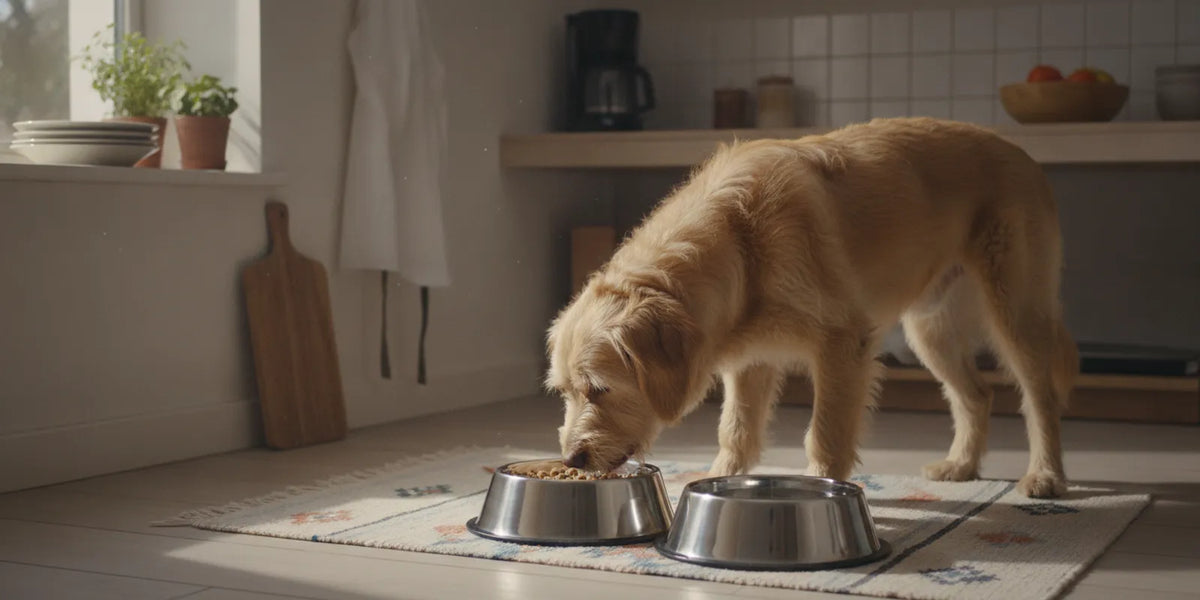
The best rug for pet bowls is one that fits your pet’s feeding habits, sits safely on the floor and makes everyday cleanup manageable. A washable rug placed beneath food and water bowls can help keep the surrounding floor cleaner when your dog splashes while drinking or drops food during a meal. It will not catch every spill, so size, placement and realistic care expectations matter.
What should a rug beneath pet bowls do?
A feeding-area rug has a few practical jobs. It marks the spot where bowls belong, gives your pet a defined place to eat, and provides a surface that is easier to lift and clean than a patch of flooring with food and water scattered around it. It may help catch some crumbs and splashes close to the bowls. It should not be treated as a basin or a guarantee that the floor will stay dry.
Think about the mess you actually see. One dog may take a few careful sips and leave only a small wet ring. Another may carry water on its muzzle, push a bowl, or drop kibble while eating. A rug can help contain the ordinary scatter close to the feeding spot, but a tipped bowl or a stream of water can travel beyond its edge. Choosing a rug means planning for routine cleanup, not expecting it to prevent every accident.
A low-profile rug can also make the bowl area feel like part of the room rather than a temporary setup. My Magic Carpet rugs have an approximately quarter-inch profile. The integrated nonslip backing is intended for suitable floors, not carpet, and traction should not be treated as universal slip prevention. Keep edges flat, choose a place with enough clearance, and check the rug and floor as part of ordinary care.
For a kitchen feeding station, you can browse washable kitchen rugs for a design that works with the room, or look across the full rug collection if you are also coordinating a nearby space.
How do you measure the feeding area?
Measure the space your pet uses, not only the bowls themselves. Put the bowls in their usual positions and note how far apart they sit. Then watch where your pet stands, how it approaches, and whether it steps backward or turns after eating. Add that working area to the bowl footprint. The point is to keep bowls fully on the rug while leaving enough room for your pet to use them without catching a paw on an edge.
Use a tape measure or paper templates to test the outline before choosing a size. Mark the proposed rug corners with removable painter’s tape, then place the bowls inside the outline. Walk around the proposed area as you would during meal preparation. Open the cabinet and appliance doors nearby, and check whether the rug would enter a busy walkway. This simple test can reveal that a seemingly generous rug is awkward in a narrow kitchen, or that a small rectangle leaves the water bowl just outside the useful area.
Account for the person who cleans the station, too. Leave enough space to lift and refill bowls without pulling the rug out of place. If you keep food, a scoop or a water pitcher nearby, consider where those items sit and whether you can reach them without stepping on a damp patch. A good outline should work for both the pet and the household routine.
| Rug size or option | Where it may work | What to measure or check |
|---|---|---|
| 2.5x7 runner | A longer kitchen area, including a feeding spot along a counter or near the sink and stove | Available length, walkway width, cabinet and appliance doors, and whether both bowls sit fully on the rug |
| 3x5 accent rug | A more defined feeding station with room around bowls and a pet’s standing space | Distance from bowls to the edge, approach and turning room, and nearby furniture clearance |
| Another available size | A wider, smaller or unusually shaped area, depending on the current assortment | Confirm dimensions on the current product page and test the outline in the actual room |
The measurements in the table are starting points, not a rule that one size fits every pet. The 2.5x7 runner is a useful kitchen format because it can serve a longer strip in front of a counter, sink or stove as well as a feeding spot. A 3x5 accent rug can be a better fit when bowls occupy a compact, dedicated corner. Check the live product page for the current size selection before deciding. The small accent rug collection is a useful place to compare options for a defined station.
Should you choose a kitchen runner or a 3x5 accent rug?
Choose based on the shape and use of the area, not just the room name. A runner makes sense when the feeding spot is part of a longer kitchen lane. It can sit in front of the sink or stove, where cooking splashes and dish-cleaning messes also happen, and can extend past the bowls without forcing you to put a small rectangle in the middle of the walkway. Make sure the longer rug does not narrow the path or block a door.
For example, imagine bowls set beside a run of cabinets at one end of a galley kitchen. A runner aligned with that run may leave the central walking path open while giving the bowls a stable place on the rug. Measure the cabinet length and the distance to the opposite counter. If the runner would reach into a turn or door swing, shorten the useful area by choosing another location or testing a smaller rug footprint. Do not assume a longer rug is automatically more practical.
A 3x5 accent rug is often easier to position when the bowls sit in a corner, beside a pantry, or in a spot away from the main kitchen work zone. It can give the pet room to stand without bringing a long strip of rug into the room. Make a paper or tape outline to see whether the pet can approach from the direction it prefers. If the rug extends under a cabinet toe-kick or furniture, confirm that the edge remains accessible for lifting and cleaning.
Consider whether the rug will have one job or several. A runner can serve the kitchen work area as well as the feeding station, but that also means more foot traffic and a larger area to check for crumbs or moisture. A compact accent rug keeps the feeding area distinct, although it may not cover splashes that land outside its footprint. Both choices involve trade-offs; there is no size that catches every mess in every home.
You can compare the room and placement guide for ideas about how a rug fits its surroundings, then review available styles and dimensions before ordering. The current product listing is the place to confirm size details, since selection can change.
Where should the rug sit in the room?
Start with a clean, dry, hard surface. Place the rug where bowls can sit wholly on its surface and where your pet can approach without stepping over a curled corner. Keep it clear of door swings and, where possible, the busiest path through the room. A feeding station near a wall may help keep bowls from drifting into a walkway, but leave enough space to remove and clean them.
Observe a few ordinary meals before you settle on a permanent position. Notice whether your pet leans on one side of the bowl, shifts its feet, backs away quickly, or nudges the bowls across the rug. If bowls slide or tip, address the bowl stability itself rather than expecting a rug to solve that problem. The rug’s nonslip backing is intended for suitable floors; it does not promise that bowls cannot move or that a rug cannot shift in every circumstance.
Check the edge in relation to nearby cabinets and appliances. A rug that sits partly under a cabinet door may catch when the door opens. A rug that reaches too far into an aisle may become part of the walking route, especially when people carry hot dishes or full water bowls. The same concern applies to a kitchen island: allow room to walk around it without stepping on a raised edge.
- Put the bowls on the rug rather than straddling the rug’s edge.
- Leave room for your pet to approach, stand and turn naturally.
- Keep edges flat and avoid placing the rug where a door or drawer catches it.
- Keep the station out of a high-traffic lane if the room allows.
- After a spill, check beneath the rug and dry the floor if moisture has reached it.
In a narrow kitchen, align the runner with the counter instead of letting it jut into the walkway. In a small feeding corner, center an accent rug under the bowls and leave space to pull it out. If you move the station, take a moment to check the floor where it was sitting. Food crumbs and moisture can collect around the perimeter even when the visible rug surface looks clean.
What if your pet moves the bowls or makes a bigger mess?
If bowls shift during meals, watch how it happens before changing the rug setup. A pet may push a lightweight bowl forward, lean against it, or nudge it while turning away. The rug gives you a defined floor area, but it is not a bowl holder. Consider whether the bowls themselves sit securely and whether their placement leaves enough room for the pet to stand without bracing against the edge. If a bowl keeps moving, repositioning the station or using a more stable bowl may address the cause better than choosing a larger rug.
For a dog that splashes water, move the water bowl slightly inward so it is not close to the edge, while leaving room for a comfortable approach. If the feeding spot is beside a cabinet, check that there is still space to pull the bowl out and wipe around it. After a particularly wet meal, lift the bowls, blot the rug, and inspect the floor underneath. If the mess repeatedly reaches beyond the rug, use your observations to revise the footprint or placement; do not rely on the rug to contain every splash.
For dry food scatter, look at where pieces land rather than automatically upsizing. Some pets drop food just outside the bowl, while others carry pieces several steps away. A wider feeding zone may help with the first pattern; a different station location may be more practical for the second. You can use a temporary outline to compare placements before committing to a size. Make one adjustment at a time, then observe a few meals to see whether the feeding area is easier to reset.
What construction and floor details should you check?
My Magic Carpet describes its rug format as a one-piece design with a built-in waterproof lining within the nonslip backing. On suitable floors, the integrated backing means a separate rug pad is not needed. The lining can make liquid less likely to soak through to hard-surface flooring, but it is not guaranteed floor protection. A large spill can run off the edge, and moisture may remain beneath the rug if a spill is left unattended.
That distinction matters around water bowls. If your dog tends to drip after drinking, place the bowls far enough from the edge to give ordinary drops a little room. If the dog tips a bowl, pick up the bowls and rug as needed, blot the liquid and check the floor below. Do not leave moisture trapped beneath a rug. A rug is a floor covering, not a substitute for promptly addressing a spill.
Check the floor surface before setting the rug down and keep that surface clean and dry. The nonslip backing is not effective over carpet, so do not rely on it to grip there. If the floor is unusually smooth or the rug is in a place where it may be pushed, inspect its position regularly. No backing description can replace checking the conditions in your own home.
Rug height and edge behavior matter as much as the center. The approximately quarter-inch profile is low, but you should still check that the edge lies flat in the chosen location. Avoid folding or trapping an edge under an appliance or furniture leg. For households with a dog that changes direction quickly, leave a clear approach instead of positioning the rug where the pet has to squeeze past a bowl or corner.
How do you clean a rug after feeding time?
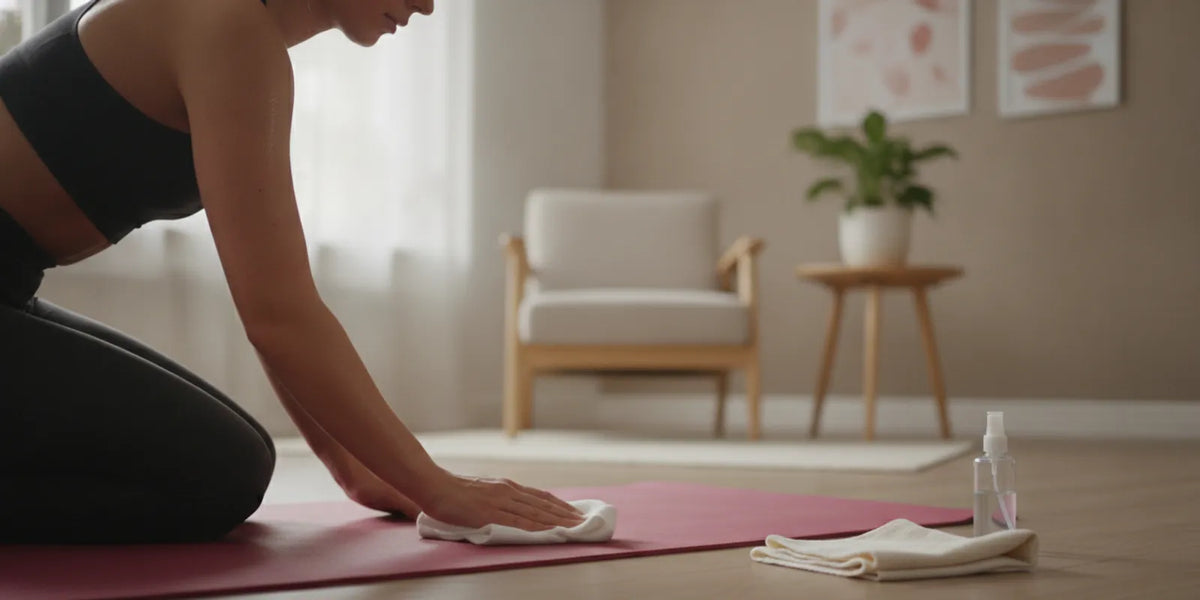
Use a simple sequence: remove the bowls, clear loose food, blot liquid promptly, spot-treat residue when needed, and wash the rug if a larger mess calls for it. Some stains, especially oil-based ones, can set quickly, so do not leave a visible mark until the next routine wash. Follow the care instructions for the specific rug rather than applying harsh products or scrubbing aggressively.
For a small spill or scattered food
Move the bowls to a clean spot first. Pick up dry pieces and shake or vacuum loose crumbs as appropriate for the rug’s care directions. Blot a wet area rather than rubbing it outward. If a mark remains, spot-treat it and follow the product’s care guidance. A damp cloth can make a small cleanup quicker than washing the entire rug, but do not saturate the rug or leave moisture underneath it.
For a larger mess
Remove the bowls and clear the area so the rug can be handled without spreading food or liquid. Blot promptly and spot-treat. When the mess calls for a full wash, wash the rug separately on a cold delicate cycle with mild detergent. Then tumble-dry on low or air-dry. Do not use bleach, high heat or an iron. Let the rug dry fully before returning it to the feeding area, and make sure the floor beneath is dry as well.
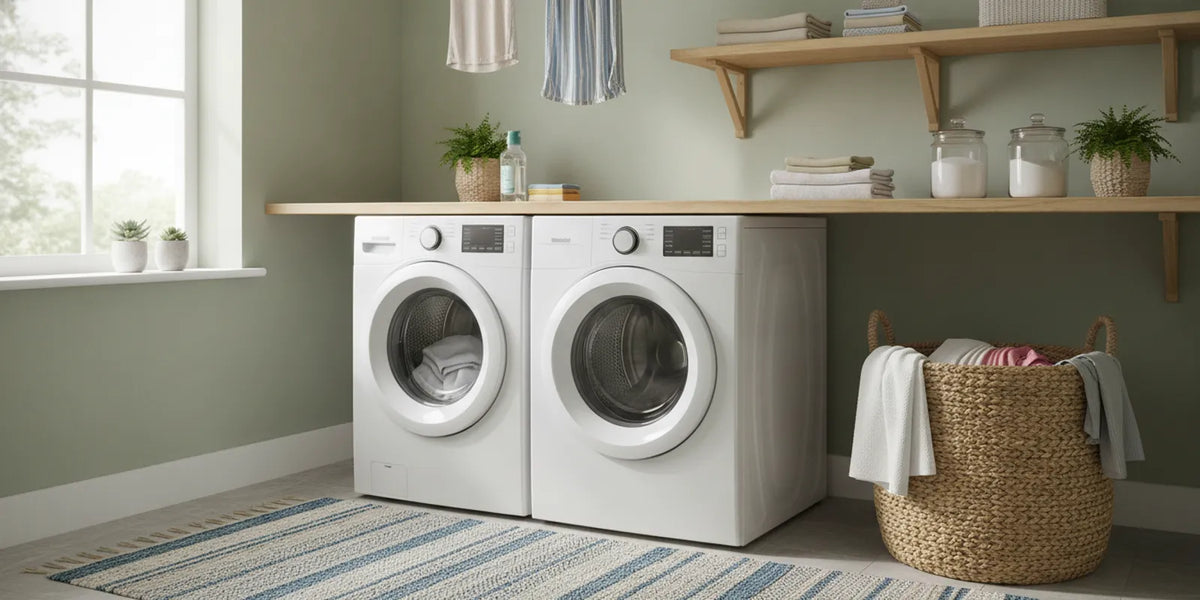
Do not assume every size will fit every home washer. Check the current product information for the rug you are considering, especially before planning to machine-wash a larger size. Avoid forcing a rug into a drum that is too small or ignoring the care directions. If you are still comparing sizes, the shop-all rug collection lets you review current options; confirm details on the individual product page.
Between washes, build a short reset into the feeding routine. Lift the bowls to refill them, wipe up new drips, and look along the rug’s edge for crumbs. Once in a while, lift the rug and check the floor below. These small checks can tell you whether the placement is working or whether the bowls need to move farther from the edge. They also help you notice a wet patch before it stays underneath the rug.
How is rug care different from pet-bed-cover care?
A washable rug and a washable pet-bed cover are different products with different construction and care instructions. The rug is a floor covering with its own backing and wash directions. A pet bed has a removable washable cover around a separate poly-fill insert; do not assume the complete bed belongs in the washing machine. Follow the directions for both the cover and insert if you are cleaning a bed.
This distinction is useful when you are handling more than one kind of pet mess at home. Do not apply rug directions to the bed, and do not apply bed-cover instructions to a rug. The same principle applies to any household item: check the individual product’s material and care details instead of relying on a general label such as “washable.” For placement and rug sizing, use the doorway and entrance rug collection as another example of choosing a format for a particular area, and review each item’s current details.
What should you check before choosing a bowl-area rug?
Before you settle on a design, run through the room and routine together. The right rug should fit the space, suit the floor, and make cleanup feel manageable without creating a new obstacle. A pattern or color can help the bowl area feel connected to the kitchen, but appearance should come after practical fit and care details.
- Measure the whole activity area. Include both bowls, the pet’s stance and turning room, plus the amount of space you need to refill or remove bowls.
- Test the outline in the room. Use tape or paper to check clearances around cabinets, doors, appliances and walking paths before choosing a size.
- Choose the shape for the location. A 2.5x7 runner may suit a longer kitchen zone, while a 3x5 accent rug may fit a contained feeding corner.
- Match backing to the floor. Integrated nonslip backing is for suitable hard floors and should not be relied on over carpet.
- Set realistic expectations. A built-in waterproof lining can make a spill less likely to soak through, but does not guarantee that all liquid stays on the rug.
- Check washing and drying details. Follow cold-delicate, mild-detergent, low-heat or air-dry guidance; do not use bleach, high heat or an iron.
- Confirm size-specific information. Review the live product page for dimensions and care guidance, and do not assume a larger rug fits a home washer.
- Plan for the daily reset. Put bowls fully on the rug, blot messes promptly, and check underneath if liquid spills.
If the bowl station is part of a larger kitchen refresh, compare the current kitchen rug options with compact styles in the small accent assortment. Current sizes and product details can change, so rely on the product listing for the specific rug you are considering rather than an old description or a remembered selection.
Find a rug for your feeding area
Frequently asked questions
Can a rug keep water from reaching the floor?
A built-in waterproof lining within the nonslip backing can make liquid less likely to soak through to a hard-surface floor, but it is not guaranteed floor protection. Water can run over an edge or remain underneath after a spill. Blot promptly and check the floor below if a bowl tips.
Is a 2.5x7 runner a good choice under dog bowls?
It can work when the feeding area sits along a longer kitchen counter or shares space with the sink or stove. Measure the available length and width, keep bowls fully on the rug, and make sure it does not intrude into a walkway or block a door. A runner can help keep the kitchen floor cleaner around routine splashes, but it will not catch every drop.
When might a 3x5 rug work better?
A 3x5 accent rug may suit a more defined feeding station, such as a corner or a space away from the main kitchen work area. Check that it includes room for the bowls and your pet to stand and turn. If the bowls would sit close to the edge, test another position or compare another available size.
How should I wash a rug after a feeding mess?
Remove bowls, clear loose food, blot liquid and spot-treat residue promptly. For a larger cleanup, wash the rug separately on a cold delicate cycle with mild detergent, then tumble-dry on low or air-dry. Do not use bleach, high heat or an iron, and check that the rug and floor are dry before putting the bowls back.
Can a pet bed be washed the same way as a rug?
No. A pet bed has a removable washable cover and a separate poly-fill insert. Follow the bed’s own care instructions for each part rather than assuming the whole bed can be machine-washed with a rug.
The best bowl-area rug is the one that fits your room and your pet’s routine, rests on a suitable floor, and makes ordinary cleanup easier while keeping expectations realistic.