Best Anti Fatigue Mat for a Standing Desk: Selection Tips
The best anti fatigue mat for standing desk use is not simply the thickest or softest option. It is the one that fits your standing area, feels suitable underfoot, stays out of your way, and matches how you plan to clean it. Before choosing, measure your workspace, inspect the edge and material, and check the care instructions for the exact mat you are considering.
Map the standing area before choosing a mat
Start with the space you actually use while standing. A desk can have a wide top but a smaller clear area underneath. Legs, a chair, drawers, cords, and nearby shelves all affect where a mat can sit. Measure the usable floor area, not just the desktop. Stand in your usual position and note how often you shift side to side or step back to reach something. If you move between sitting and standing, make sure the mat will not block your chair when you roll it in.
- Measure the clear width between desk legs or other obstacles.
- Measure the depth from the desk edge to where you naturally stand.
- Leave space for the chair and for walking around the desk.
- Check whether the mat can lie flat without touching a door, cabinet, or floor vent.
For a desk against a wall, a deeper mat may extend into a walkway. In a corner setup, width may matter more than depth. Sketching the footprint with painter’s tape can make the fit easier to judge before you buy. Leave the tape in place while you work through a normal routine. Notice whether your chair rolls over the planned boundary, whether you step across it frequently, and whether a drawer or door needs the same space. Those everyday motions are easy to overlook when looking only at product photos.
Compare footprint, surface feel, and edge profile
Three details shape how a mat fits into a workday: its dimensions, the feel of its surface, and the way its edges meet the floor. Product photos can help, but dimensions and written specifications are more useful for checking fit. Compare options using the same criteria.
| Feature | What to compare | Why it matters |
|---|---|---|
| Footprint | Width and depth against your measured standing zone | Allows room to shift position without crowding a walkway or chair |
| Surface feel | Material, texture, and product description | Feel is personal; product wording cannot guarantee a particular sensation |
| Edge profile | Thickness and how clearly the edge rises from the floor | A raised edge should be considered in relation to nearby foot traffic |
| Care | Wipe, rinse, or other instructions for the exact product | Helps avoid a cleaning method the maker advises against |
Surface feel is subjective. Some people prefer a firmer base, while others look for a more yielding feel. Read the material information and avoid assuming that a label such as “anti-fatigue” means every mat feels the same. If possible, compare the product’s dimensions and construction with a mat you already use. Remember that photographs show appearance, not how a surface responds to your weight or how it feels with your usual footwear.
How much room do you need around a standing desk?
Think about movement, not only the space under your feet at rest. You may step back to open a drawer, turn toward a shelf, or move between a keyboard and a second screen. A mat should suit those movements without creating a tight boundary that catches your attention. For a narrow desk, a compact footprint may leave more floor clear for a chair or doorway. For a broader workstation, more width can give you space to change stance.
A mat that is too small can feel restrictive if you often shift position; one that is too large can dominate a shared room. Match the dimensions to your habits rather than choosing by appearance alone. If the product page gives only one dimension, do not guess the other: look for a full size specification or ask the retailer to clarify before purchase. Also consider the furniture around the desk. A filing cabinet that opens into the standing area may make a wide mat inconvenient, while a clear wall-side station can accommodate a larger footprint more easily.
Check the floor underneath, too. Nonslip backing is intended for suitable hard surfaces, but traction should not be assumed on every floor covering. The brand’s product information warns that grip is not effective over carpet. If you plan to place a mat on carpet, verify its suitability instead of assuming it will stay put. Keep the floor clean and dry as the product guidance requires, and do not rely on a mat to correct an unstable or uneven surface.
What should the surface feel like?
There is no single surface feel that suits everyone. A textured top may feel different from a smooth one, and thickness alone does not tell you how a mat responds when you stand on it. Consider whether you prefer a stable surface or a more yielding one, and check product descriptions for material and construction details. Think about whether the surface will work with shoes, socks, or bare feet, according to your ordinary work routine.
Try to separate preference from promises. Do not treat an anti-fatigue label as a medical claim or a guarantee of pain relief. If you have a health concern or need advice about standing for work, ask a qualified health professional. A floor mat is a workspace accessory, not a substitute for individualized medical guidance. It is sensible to take regular breaks and change positions as appropriate to your own needs, rather than expecting a mat to solve every issue associated with standing.
Keep footwear in mind. Bare feet, socks, and shoes can each change the way a surface feels. If your routine varies, choose based on the conditions you use most often. You can also consider whether the mat’s texture is easy to keep free of crumbs, dust, or pet hair. A surface that looks smooth in a listing image may have texture that is more visible in person, so use any available close-up images and material details to make a practical choice.
Check the edge and transition to the floor
Edges matter because you approach and leave a mat throughout the day. Note the stated thickness and inspect product images for how the sides meet the floor. A visible raised edge may be more noticeable in a narrow walkway than in an open office corner. Place the mat where it will not cross a doorway or create an avoidable obstacle. Keep cords away from its edges, and do not tuck it under a rolling chair unless product instructions say that use is appropriate.
If the mat curls, shifts, or does not lie flat, stop using it until you can resolve the issue safely. Follow the maker’s guidance on placement and use. Do not trim a mat or change its construction unless the manufacturer specifically permits it, since modifications could affect its stability or care. A neat edge transition is useful, but it should not be the only factor: a mat still needs a footprint and surface suitable for the room.
How easy is the mat to clean?
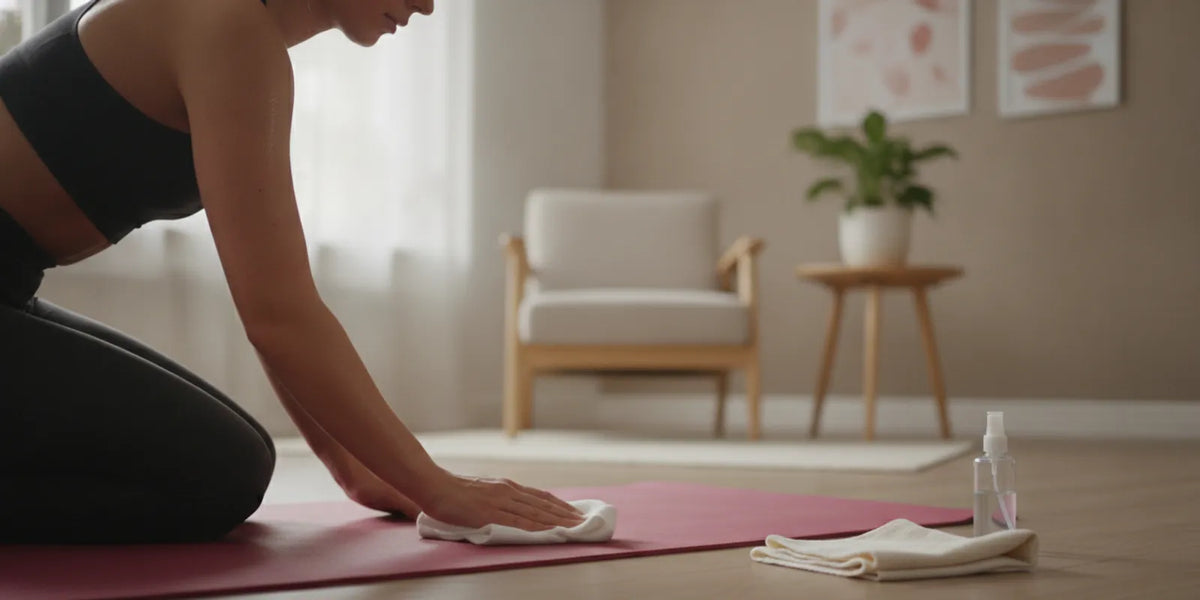
Cleaning instructions vary by product, even within a broad product category. Check the product page before ordering and follow care directions for that exact mat. Do not assume a mat can go into a washing machine because some rugs can be washed. For My Magic Carpet’s yoga and anti-fatigue mats, product care may call for wiping or cleaning in a tub; at least one yoga mat listing specifically says not to machine wash or dry. The word “washable” in a collection label does not replace the item’s instructions. Review the specific red mat listing and confirm its current cleaning directions before deciding.
For daily care, remove loose dirt, use only a cleaning method the listing permits, and let the mat dry fully before putting it back in place. Avoid strong chemicals or heat unless the maker explicitly says they are suitable. If a spill happens, check the product instructions rather than applying rug-care steps to a different product. Keep the care directions where you can find them, especially if other household members may clean the mat. A simple routine that follows the listed method is safer than experimenting with a cleaner or appliance.
How do you compare options without overcomplicating it?
Use a short comparison sheet. Record the dimensions, surface description, thickness or edge details, care method, and price shown on the live listing. Prices, colors, and available variants can change, so confirm them at the time you shop rather than relying on an old screenshot or general category claim. If a detail is absent, treat it as unknown rather than filling in the gap based on a different mat.
- Measure: Write down clear floor width and depth at your desk.
- Choose a footprint: Decide how much room you want for stance changes.
- Check materials: Note the surface and base details listed for that product.
- Inspect edges: Consider the profile alongside nearby traffic and chair movement.
- Read care directions: Confirm whether the mat should be wiped, tub-cleaned, or handled another way.
- Confirm the exact item: Check selected color and size on the current product page.
Comparing options in one place can help you avoid choosing by a single feature. Browse the full rug and mat assortment, then use listing details to check a mat against your measurements. The shop-all collection offers another way to explore catalog styles. Remember that a general collection page may not state the care directions for every individual item, so open the exact product listing before reaching a decision.
When could a mat be a poor fit?
A mat may not suit your setup if it blocks a doorway, conflicts with a chair, or cannot lie flat on the surface where you intend to use it. It may also be the wrong choice if its care requirements do not match the time or cleaning equipment you have. These are useful reasons to pause and recheck product details before ordering. In a shared room, think about how other people use the floor. A desk mat should not create an awkward path to a closet or become a tripping concern for children or pets.
In a compact office, try marking the outline and moving around it for a day. That simple test can reveal whether the footprint is practical. If your desk has wheels, adjustable legs, or a chair that moves through the same space, test those movements too. A mat can look appropriate when the room is still but become an obstacle during ordinary use. If the room has multiple functions, preserve enough clear floor for each activity rather than allowing the desk setup to take over the entire space.
Make a final fit check before ordering
Before adding a mat to your cart, return to the product page and confirm current dimensions, material information, care directions, selected variant, and availability. The exact item matters: a collection label may summarize a category, while the individual listing provides product-specific instructions. For general shopping, you can also view small accent rugs or kitchen designs, but those rug collections are not substitutes for an anti-fatigue mat specification.
Use a final checklist: does the mat fit the measured space, is the intended floor suitable, can you approach its edges comfortably, and can you follow its cleaning instructions? If you are unsure about a particular specification, verify it before purchase rather than assuming that all items in a category share the same dimensions or care method. Keep the product page or care information available after delivery so you can refer back to the item-specific guidance.
Review the current mat details
Frequently asked questions
Does a thicker mat always feel better?
No. Thickness does not by itself tell you how a mat feels or whether it fits your workspace. Compare construction and surface details, then consider your own preferences and standing habits.
Can every anti-fatigue mat be machine washed?
No. Cleaning methods vary by product. Check the individual listing, and do not machine wash or dry a mat when its care instructions prohibit it.
Can I use a nonslip mat on carpet?
Do not assume so. The brand notes that nonslip traction is not effective over carpet. Check the product’s instructions and use it only on a suitable floor.
What should I measure before buying?
Measure the clear width and depth of the standing area, then account for the chair, nearby furniture, doors, and walking paths. The mat should fit your movements without crowding the room.
What cleaning details should I verify?
Check the exact item’s current care directions. Some mats may be wiped or cleaned in a tub, while a listing may prohibit machine washing and drying. Follow the product-specific instructions.
A thoughtful choice starts with a realistic footprint and clear product information. Compare the mat’s feel, edge, and care needs with your actual desk setup, then order only after confirming the current listing details.